All 25 official exam topics. Clear explanations, summary tables and direct links to practice quizzes.
25Topics
6.000+Questions
100%Exam coverage
01🛣️
General definitions & road duties
Roads, vehicles, driver duties
02🚫
Prohibition signs
Transit bans and restrictions
03⬆️
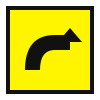
Mandatory signs
Compulsory directions and routes
04⚠️
Warning signs
Hazard alerts on the road
05🔶
Priority signs
STOP, give way & right-of-way rule
06🛤️
Road markings & obstacle signs
Lines and markings on the road surface
07🚦
Traffic lights & traffic officers
Traffic signals and officers
08🔵
Information signs
Directional road signs
09📋
Supplementary panels
Sign completion panels
10🚧
Temporary & roadworks signs
Mobile signs and road works
11⚡
Speed limits & obstruction
Maximum speed and level crossings
12↔️
Safe following distance
Braking distance and safety
13🚗
Vehicle circulation
Position, lanes and manoeuvres
14🔄
Priority order at junctions
Who passes first at intersections
15🏎️
Overtaking rules
When and how to overtake
16🅿️
Stopping, parking & departure
Where and how to stop or park
17🚛
Loads, towing & misc. rules
Cargo, towing and special rules
18💡
Lights, horns & dashboard symbols
Headlights, indicators, horn and warning lights
19🛡️
Safety equipment & its use
Seatbelts, helmets and restraint systems
20📄
Licences, penalties & documents
Categories, points and documents
21🏥
Preventing road accidents
Prevention and post-accident behaviour
22🩺
Driver fitness, alcohol, drugs & first aid
Alcohol, drugs, medications and first aid
23⚖️
Civil & criminal liability – Insurance
Compulsory RCA insurance
24🌿
Eco-driving & environmental rules
Eco-driving and environmental norms
25🔧
Vehicle components
Engine, brakes, tyres and safety
Chapter 01
🛣️ General definitions and road duties
The Italian Highway Code (Legislative Decree 285/1992) defines fundamental terms and establishes the duties of all road users. Understanding these definitions is essential for grasping the rules of road traffic.
Definitions of Road and Carriageway
A road is the area designated for the movement of pedestrians, vehicles and animals. Roads are classified as:
Motorways (Autostrade): dual-carriageway roads with limited access, no level junctions. Maximum speed 130 km/h.
Primary extra-urban roads: dual-carriageway with controlled access. Speed limit 110 km/h.
Secondary extra-urban roads: single carriageway. Speed limit 90 km/h.
Urban expressways: dual-carriageway within urban areas. Speed limit 70 km/h.
Urban district roads: single carriageway. Speed limit 50 km/h.
Local roads: urban and extra-urban. Speed limit 50 km/h in towns.
The carriageway is the portion of the road intended for vehicle flow. A road may have multiple carriageways separated by a central reservation.
A lane is the portion of the carriageway intended for a single line of vehicles.
Vehicle Definitions
The Highway Code classifies vehicles into specific categories:
Mopeds (Ciclomotori): 2- or 3-wheeled vehicles with engine ≤ 50 cc and max speed 45 km/h.
Motorcycles (Motoveicoli): motor vehicles with 2, 3 or 4 wheels with engine > 50 cc or max speed > 45 km/h.
Motor cars (Autoveicoli): motor vehicles with at least 4 wheels (excluding motorcycles).
Lorries (Autocarri): vehicles for carrying goods with a mass > 3.5 t.
Buses (Autobus): vehicles for carrying persons with more than 8 seats.
Trolleybuses (Filoveicoli): electrically powered vehicles drawing current from overhead lines.
Trailers (Rimorchi): unpowered vehicles towed by other vehicles.
Agricultural machinery: vehicles for agricultural use.
Driver Duties
Every driver has specific duties enshrined in the Highway Code:
Vehicle control: keep both hands on the wheel at all times, maintain correct posture and full control of the vehicle.
Obey signage: comply with road signs, traffic lights and instructions from traffic officers.
Compulsory documents: driving licence, vehicle registration certificate and insurance certificate must always be available.
Physical/mental fitness: it is forbidden to drive under the influence of alcohol or drugs.
Safety devices: mandatory use of seatbelts and helmets for motorcyclists.
Mobile phones: it is forbidden to use a hand-held mobile phone while driving.
⚠️
Remember: The driver is responsible for the vehicle's behaviour. In the event of an accident, they are obliged to stop and render assistance.
Key Definitions from the Code
Intersection: a road node where two or more roads meet or cross.
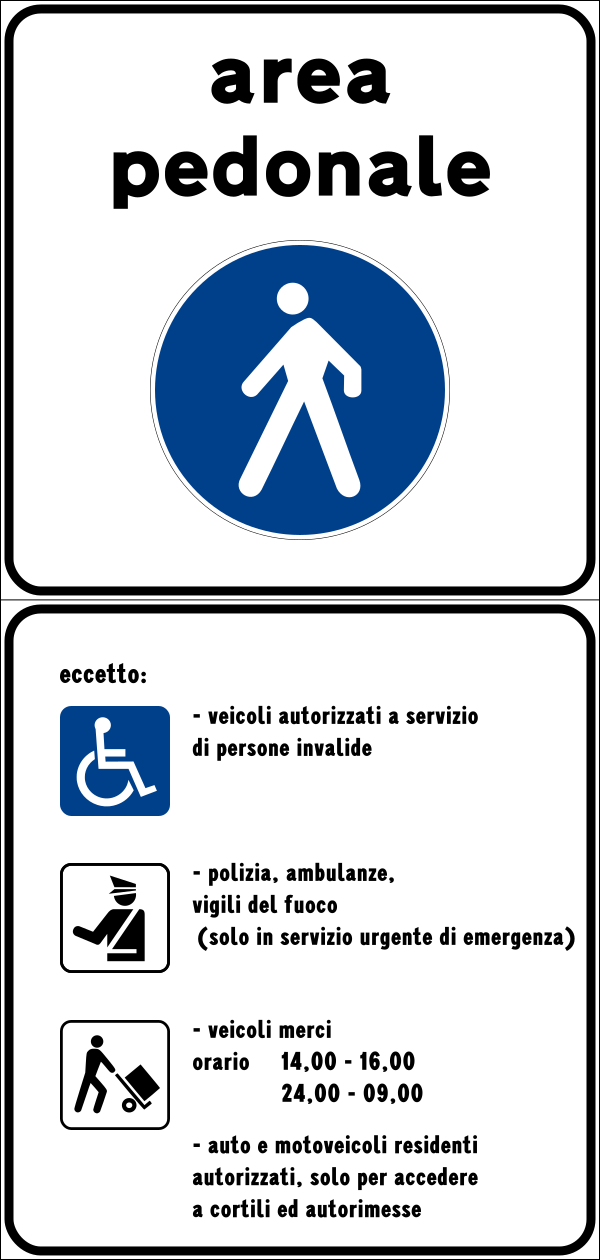
Pedestrian area: a zone closed to vehicle traffic except where specified.
Limited Traffic Zone (ZTL): an area where access is limited to certain categories of vehicle.
Built-up area: a set of buildings with roads, squares or other public spaces, marked by beginning and end signs.
Pavement (Marciapiede): the part of the road separated from the carriageway, reserved for pedestrians.
Verge (Banchina): the part of the road between the edge of the carriageway and the nearest obstacle.
Central reservation (Spartitraffico): a stripe or raised element dividing carriageways or lanes in opposite directions.
Prohibition signs impose specific restrictions on traffic. They have a circular shape with a red border on a white background. Knowing them thoroughly helps avoid fines and ensures road safety.
General Characteristics
Shape: circular
Background: white
Border: red
Symbol: black or coloured in the centre
They are placed on the right side of the road, before the point where the prohibition begins. Their validity may be limited in time by supplementary panels.
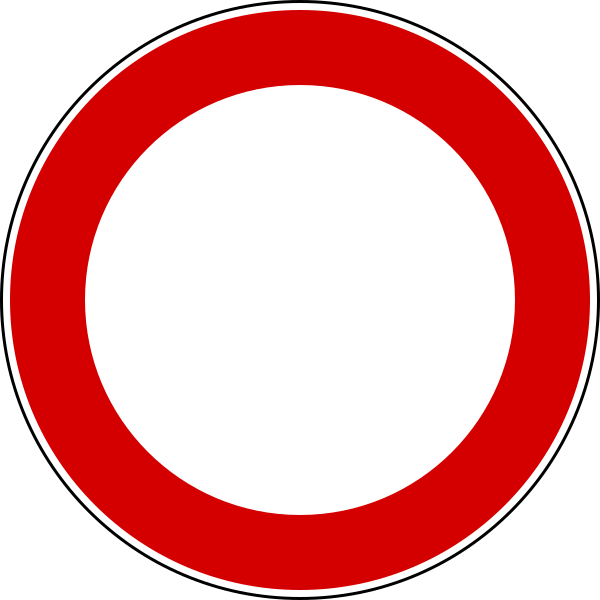
No through traffic
No vehicle may pass
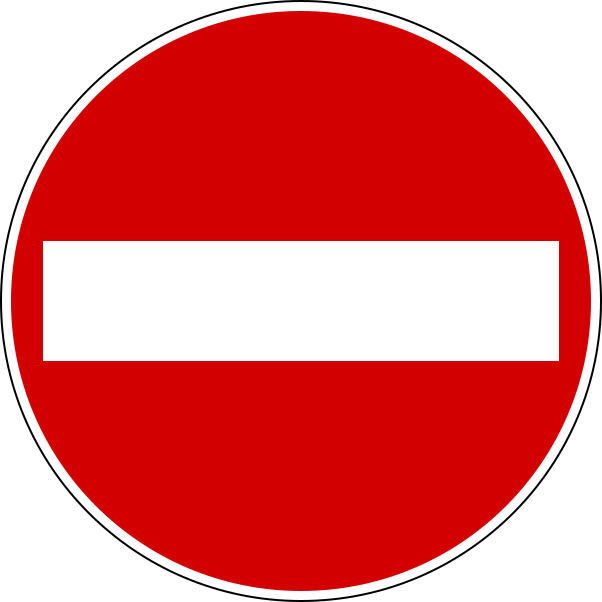
No entry
Entry forbidden
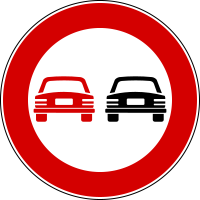
No overtaking
No overtaking motor vehicles
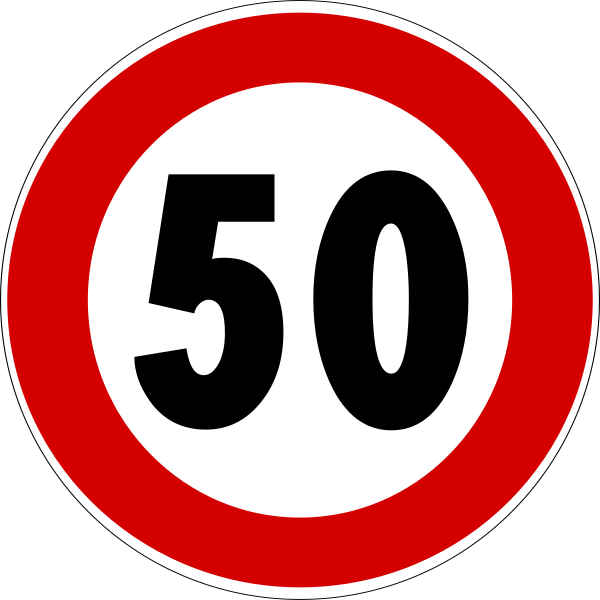
Speed limit 50
Max 50 km/h
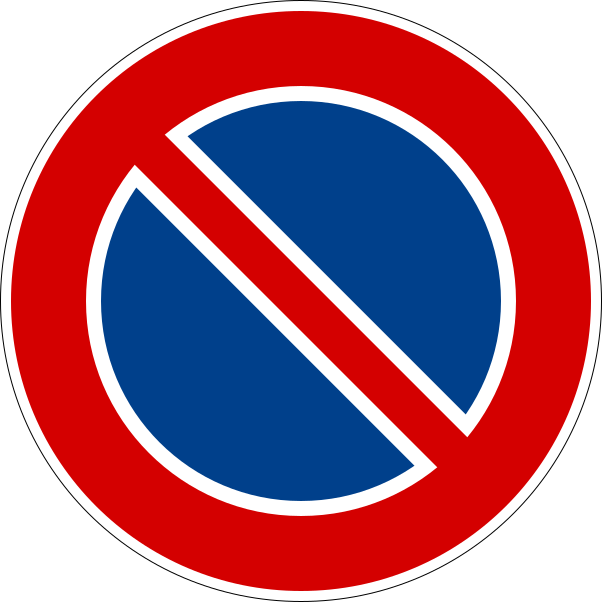
No parking
No parking allowed
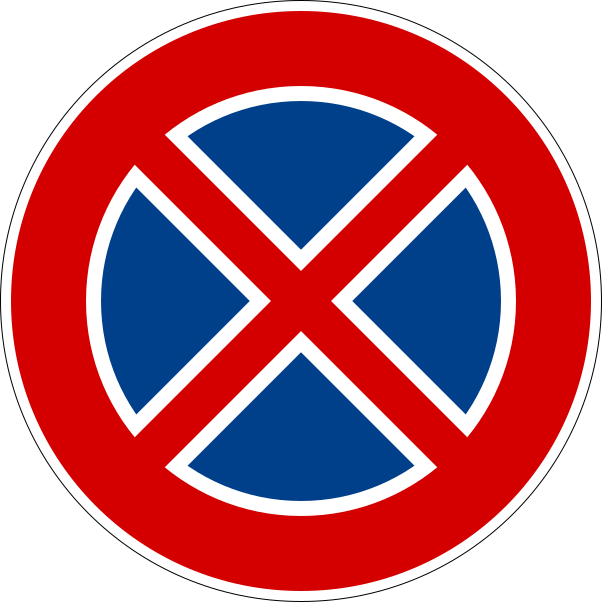
No stopping or parking
Neither stopping nor parking
Main Prohibition Signs
⛔
No through traffic — Prohibits the movement of all vehicles in both directions. Placed at both ends of the road.
🚫
No entry (wrong way) — Prohibits entry in the direction indicated. Placed at the start of a one-way road for drivers travelling the wrong way.
🔴
No overtaking — Prohibits overtaking any motor vehicle except solo motorcycles.
🔴
Speed limit — Indicates the maximum speed allowed on that stretch. Remains valid until the end-of-prohibition sign or a new sign.
Other important prohibition signs include:
No access: prohibits entry to any vehicle (solid red circle)
No parking: prohibits parking (even brief)
No stopping or parking: prohibits even a temporary stop
No overtaking for lorries: specific prohibition for heavy vehicles
No U-turn: prohibits turning around
Weight limit: prohibits vehicles above a certain weight
Height limit: prohibits vehicles above a certain height
Width limit: prohibits vehicles above a certain width
End of Prohibitions
End-of-prohibition signs have specific characteristics:
Circular with a white background and grey diagonal bars
The end of all prohibitions sign cancels all previous restrictions
The end of speed limit sign indicates the restoration of the general limit
Prohibitions end automatically on leaving the built-up area
⚠️
Caution: The no-overtaking prohibition ends at the "end of no-overtaking" sign or at an intersection. It does NOT end at the general "end of all prohibitions" sign unless that sign specifically includes overtaking.
Mandatory signs prescribe compulsory behaviour for drivers. They are recognisable by their circular shape with a blue background and a white symbol. They indicate mandatory directions, reserved lanes and imposed behaviour.
General Characteristics
Shape: circular
Background: blue
Symbol: white
They indicate that drivers must necessarily follow the direction or adopt the behaviour shown. Failure to comply constitutes a violation of the Highway Code.
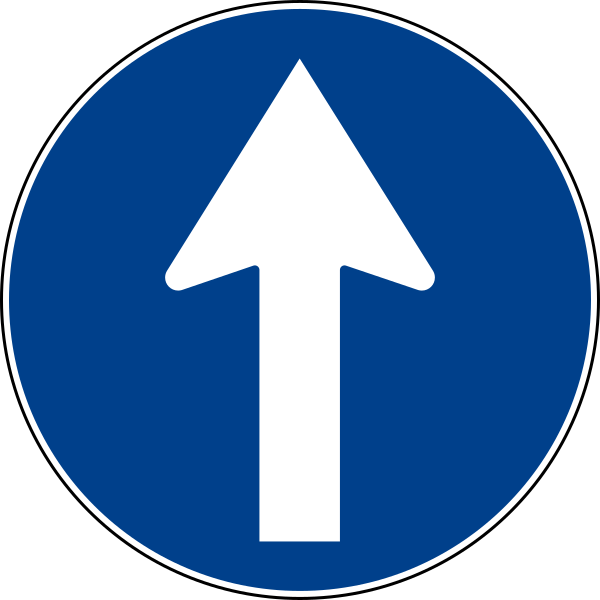
Go straight
Straight ahead only
Turn right
Right only
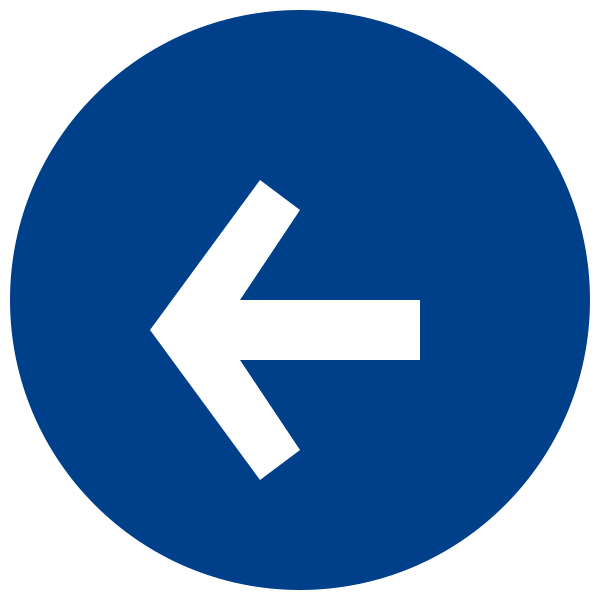
Turn left
Left only
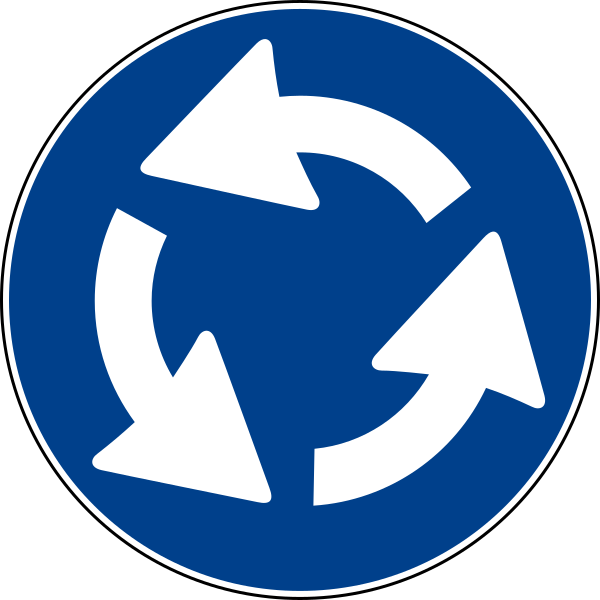
Roundabout
Anti-clockwise circulation
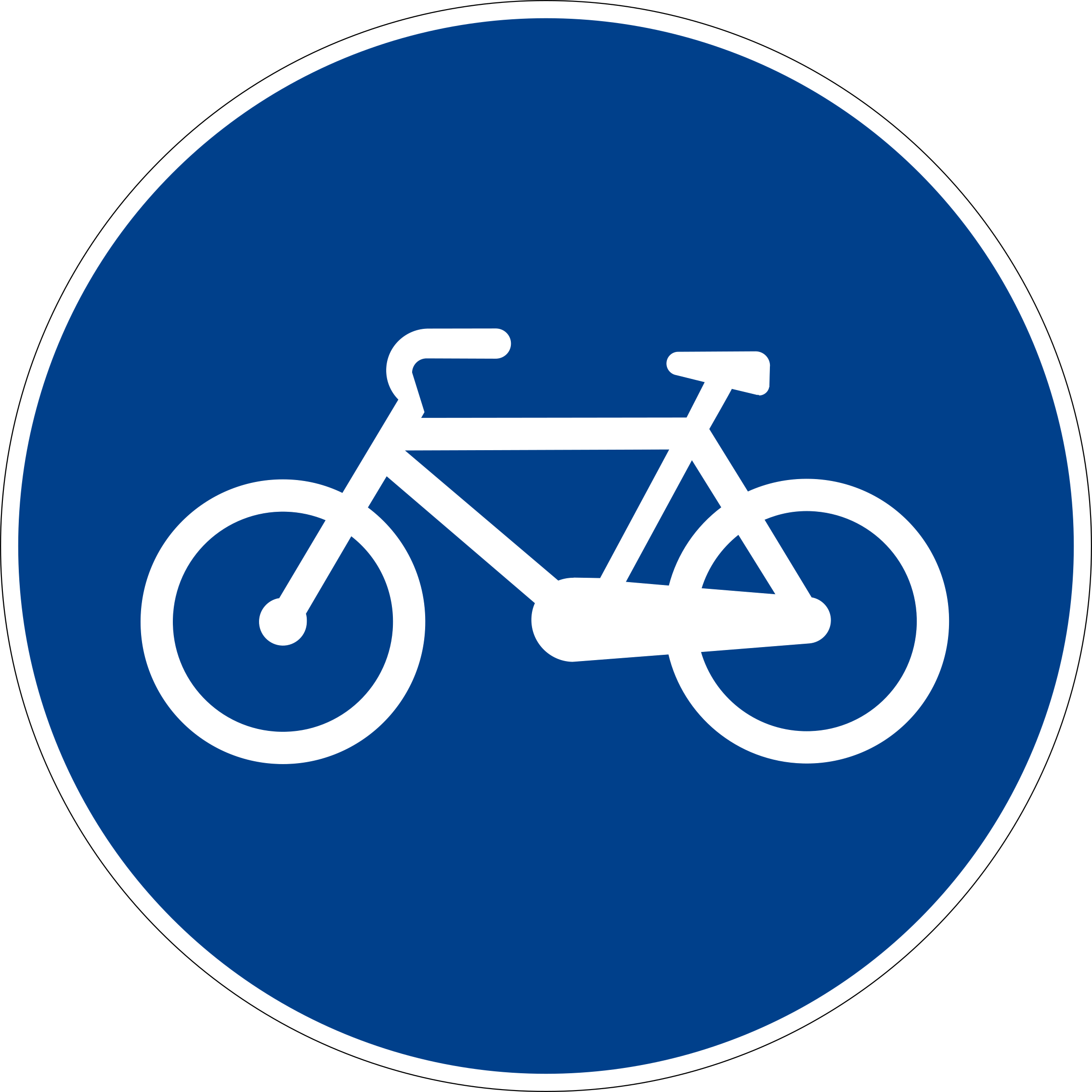
Cycle lane
Reserved for bicycles
Pedestrian route
Reserved for pedestrians
Main Mandatory Signs
Ahead: compulsory straight ahead
Compulsory direction right / left: obligation to turn in the direction indicated
Compulsory direction ahead or right / left: choice between two directions
Roundabout: obligation to circulate anti-clockwise in the junction
Cycle lane: lane reserved for bicycles (compulsory for cyclists)
Pedestrian route: area reserved for pedestrians
Minimum speed: obligation to maintain at least the indicated speed
Snow chains compulsory: obligation to fit chains or winter tyres
Compulsory passage (right or left of an obstacle): indicates which side to pass
💡
Note: Compulsory direction signs (ahead, right, left) are sometimes called "blue arrows" and indicate the only permitted direction. They should not be confused with directional arrows painted on the carriageway.
Warning signs alert the driver to imminent hazardous situations. They are triangular with a red border on a white/yellow background and allow the driver to take necessary precautions.
General Characteristics
Shape: triangular with apex upward
Background: white (or yellow in special cases)
Border: red
Symbol: black in the centre
They are placed 150 metres before the hazard in extra-urban areas and 50 metres in urban areas. They may be accompanied by supplementary panels indicating the distance to the hazard.
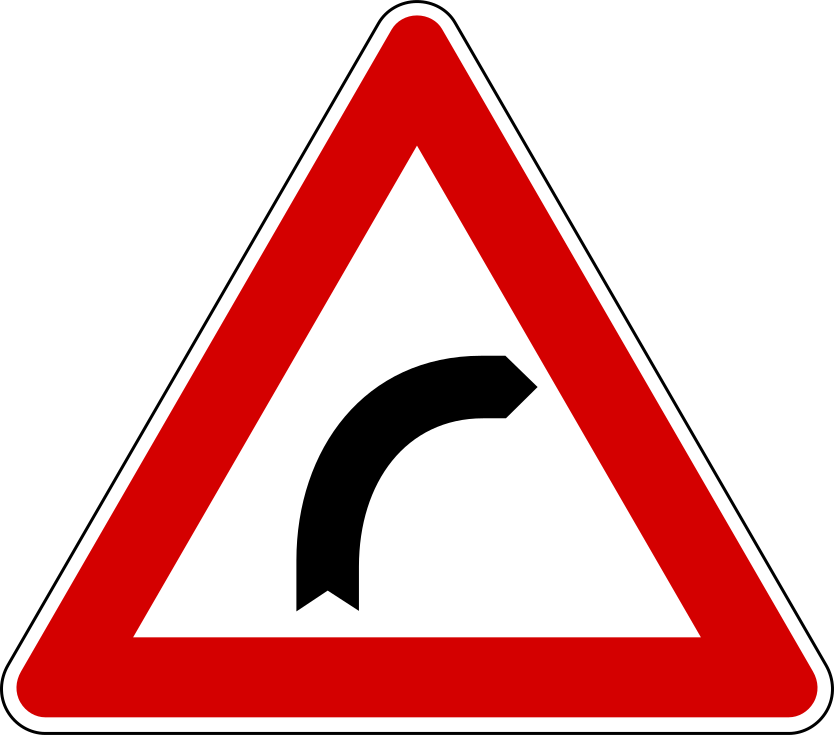
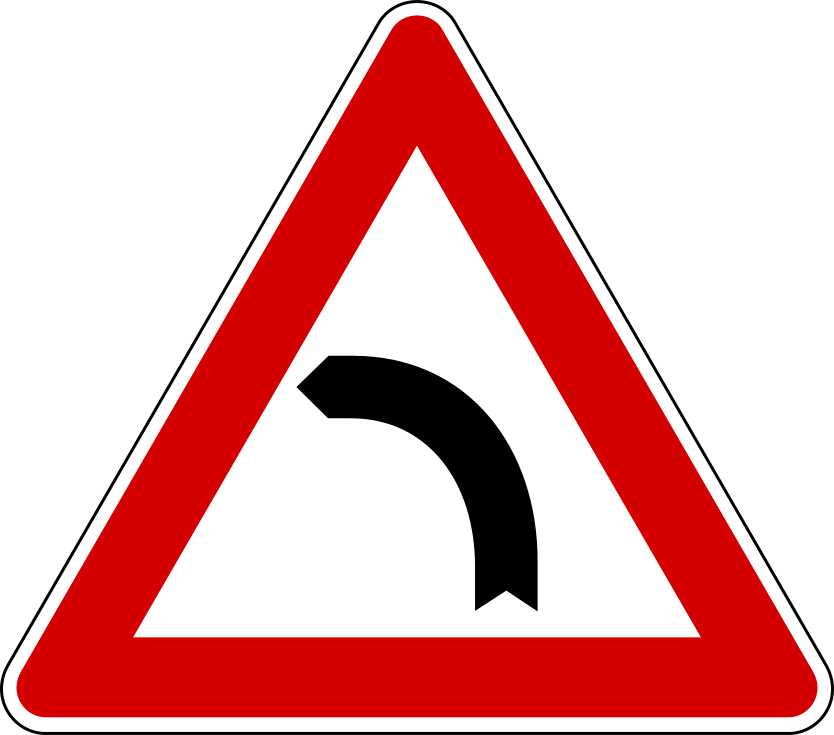
Bend right
Slow down
Bend left
Slow down
Steep descent
Use engine braking
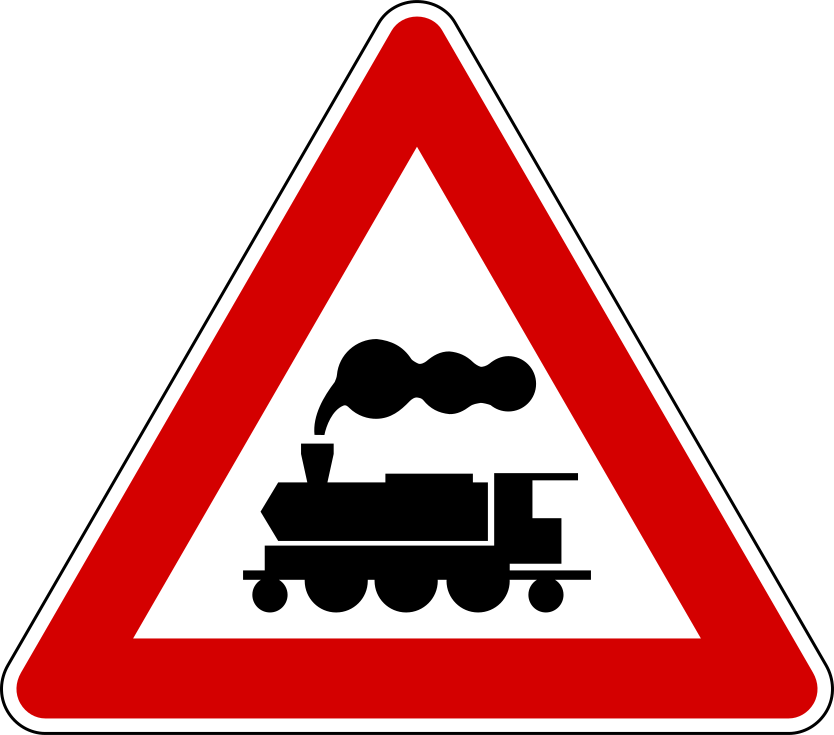
Level crossing
With barriers
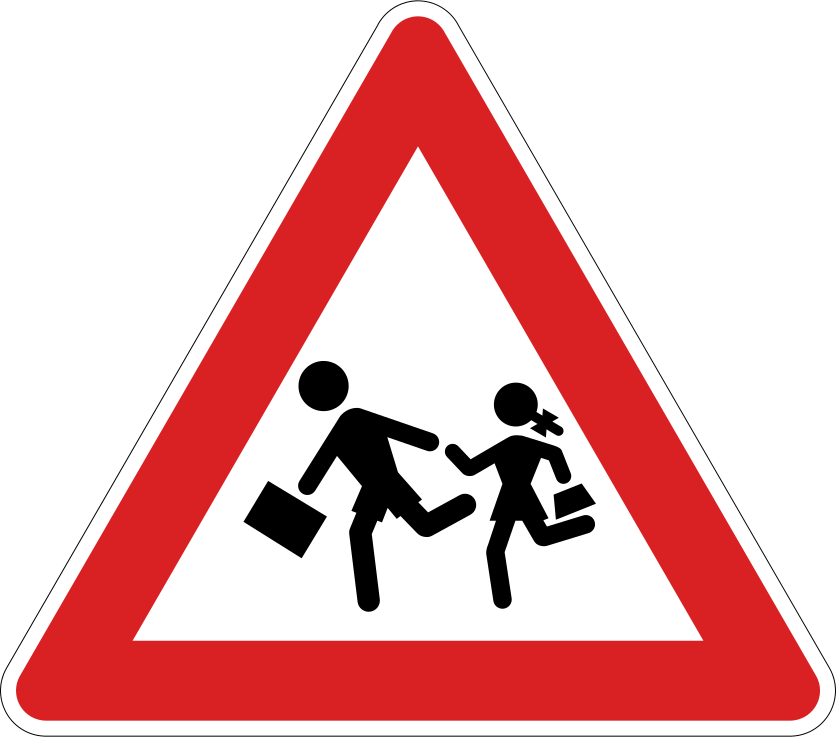
Children
School zone
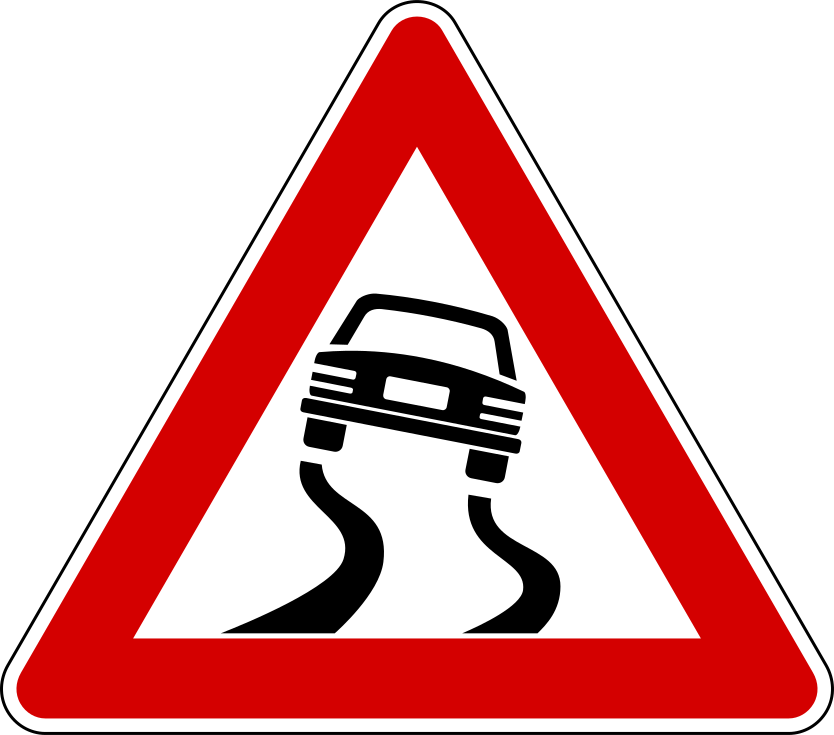
Slippery road
Skid risk
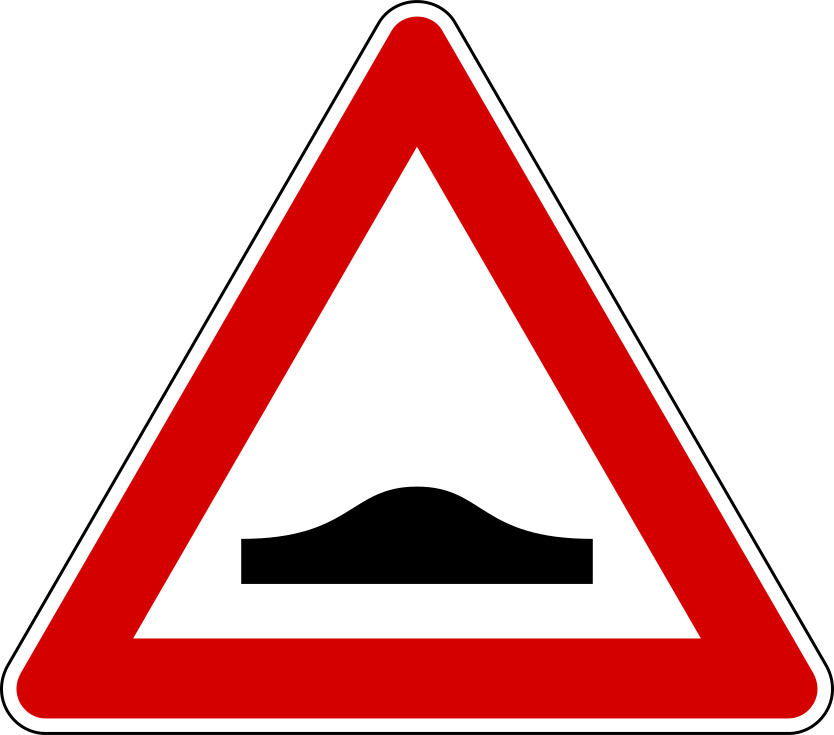
Hump
Road surface irregularity
Ped. crossing
Pedestrians possible
Correct Behaviour at Warning Signs
Reduce speed gradually
Increase the safe following distance from the vehicle ahead
Pay greater attention to the road situation
Do not overtake in sections signalled as dangerous
Be prepared to stop if necessary
⚠️
Important: Warning signs do not indicate the type of vehicle permitted, but warn of a risk. The driver must adapt their conduct accordingly.
Priority signs regulate the passage at junctions and in conflict situations between vehicles. They are among the most important category of signage, as failure to comply can cause serious accidents.
Main Priority Signs
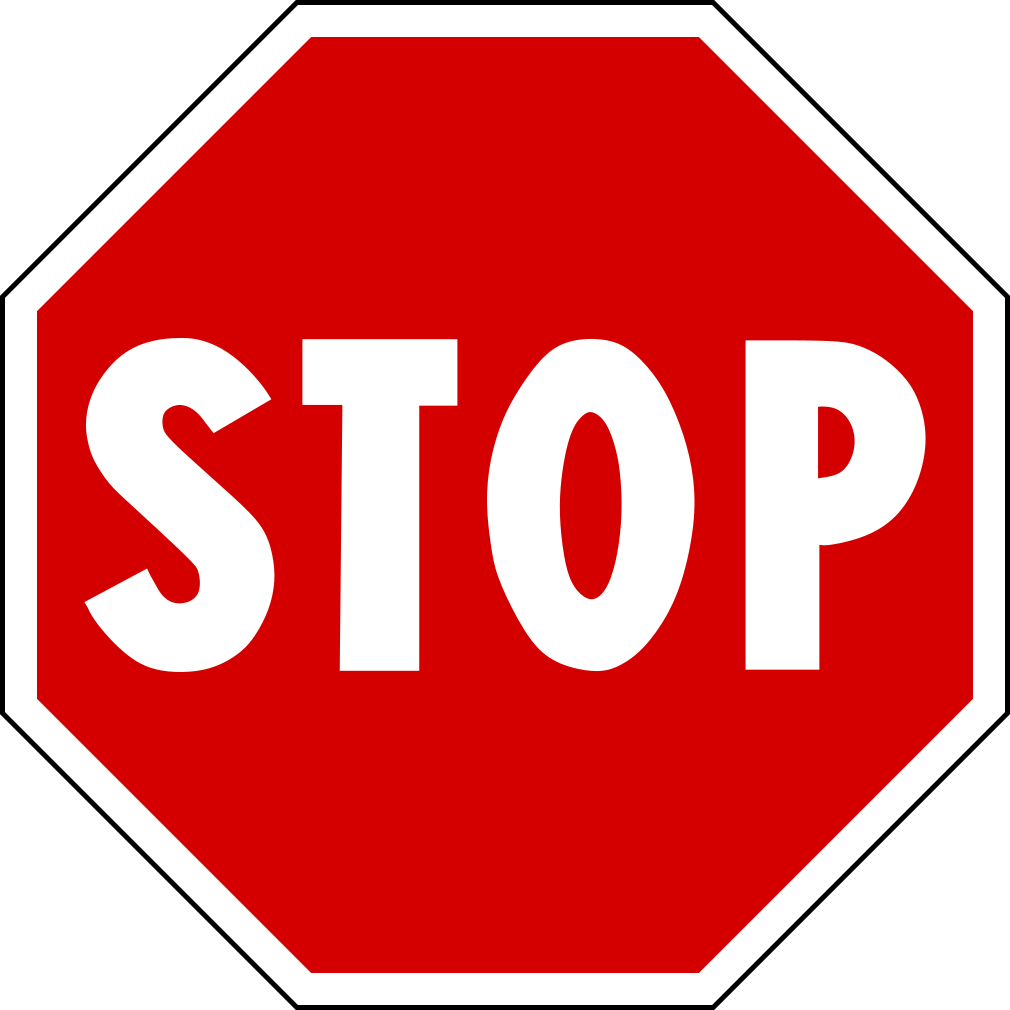
STOP
Mandatory full stop
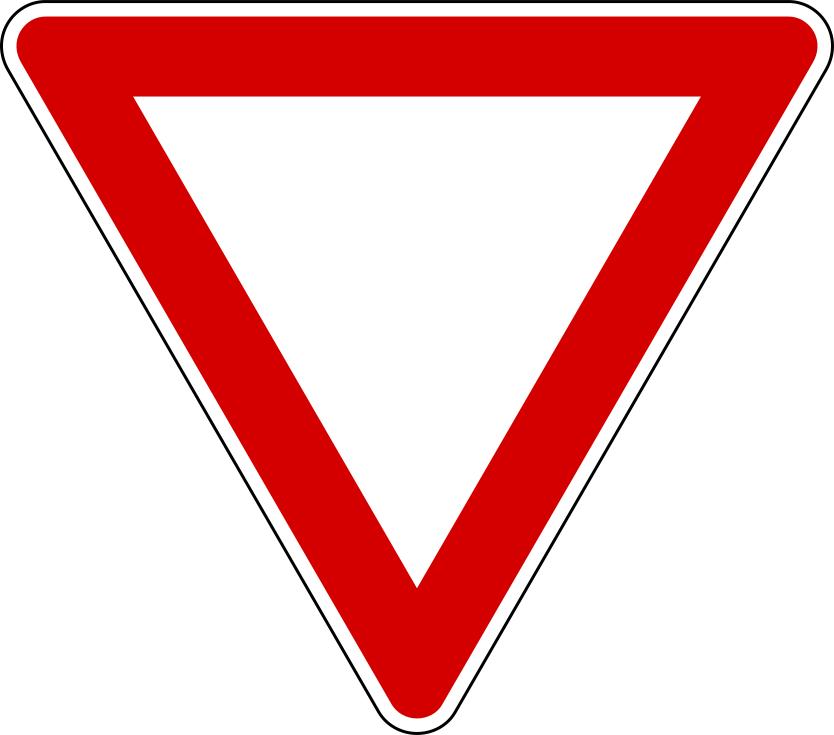
Give Way
Yield without stopping
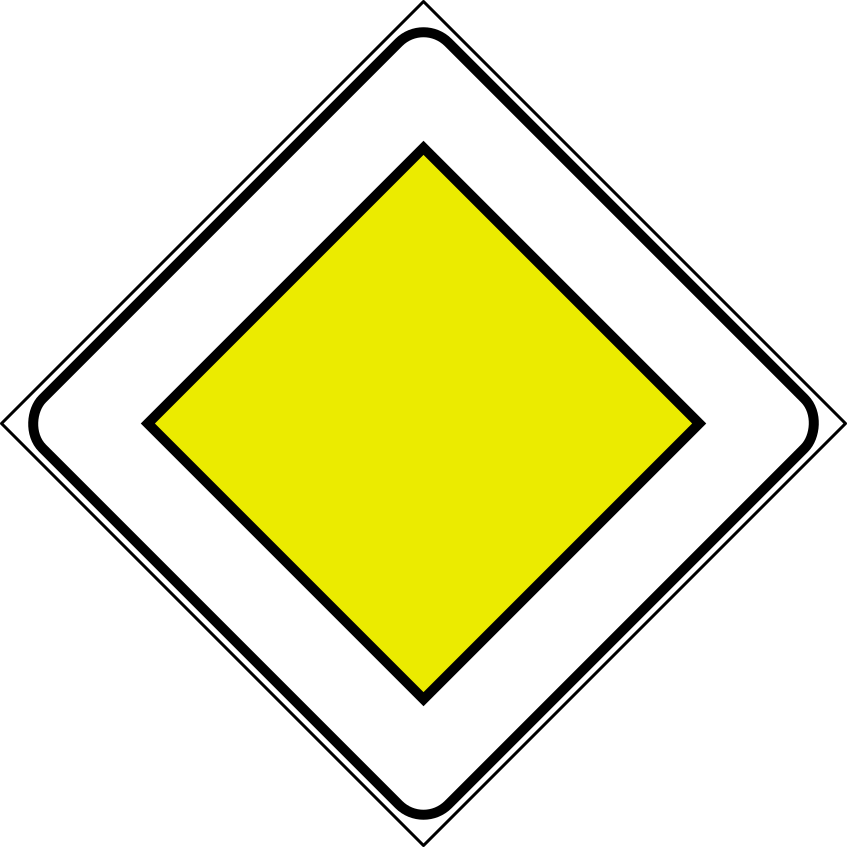
Right of Way
You have priority
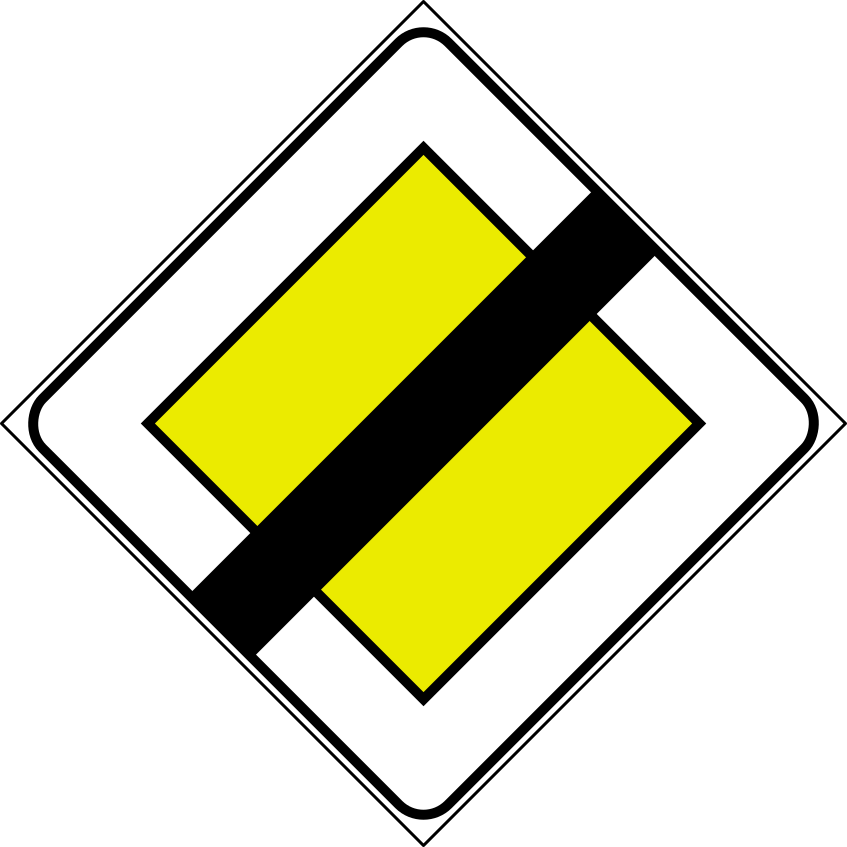
End of Priority
Priority ends here
Difference between STOP and Give Way
STOP
Give Way
Complete full stop compulsory
Slowing down is sufficient
Before the stop line (white)
Before the intersection
Even if no vehicles are present
Only if vehicles are passing
Octagonal red shape
Inverted triangle, white/red
🚨
Penalty: Failure to respect STOP or Give Way carries financial penalties and, in the event of an accident, civil and criminal liability.
Priority Road Sign
The priority sign (yellow diamond) has special characteristics:
Placed on a road that has priority over those joining it
Repeated every 150 metres in built-up areas and every 300 metres outside
May be paired with a panel showing the junction layout
The "end of priority" sign indicates where the road loses its right of way
Road markings include all lines, arrows and symbols painted on the road surface. They carry the same regulatory authority as vertical signs and must be strictly observed.
Longitudinal Lines
Longitudinal lines run parallel to the road axis:
━
Continuous white line
✗ Do not cross! — Separates lanes with opposing traffic or marks the hard shoulder.
╌
Broken white line
✓ May be crossed carefully — Separates lanes with the same direction of travel.
━╌
Mixed line
✗ Continuous side = no overtaking ✓ Broken side = may overtake carefully.
🚶
Pedestrian crossing (zebra)
Pedestrians always have priority
Transverse Lines and Areas
Stop line (continuous transverse line): the point beyond which one must not advance at a STOP sign or red light.
Give-way line (broken transverse line): the limit for the "give way" obligation.
Pedestrian crossing (zebra stripes): passages reserved for pedestrians who always have priority.
Cycle crossings: routes reserved for bicycles.
Advanced stop area: space reserved for cyclists at traffic lights.
Motorcycle box: space at traffic lights reserved for motorcycles.
Arrows and Symbols
Directional arrows: indicate compulsory or permitted directions in a lane.
Pre-selection arrows: announce the obligation to follow a particular direction (first arrows before the junction).
STOP symbol: reinforces the vertical STOP sign.
Give-way symbol: triangle painted on the road surface.
Speed number: speed limit repeated on the carriageway.
💡
Obstacle markings: Raised elements and obstacles on the carriageway are indicated with white and black diagonal stripes (directional islands, kerbs, etc.) to make them visible at night.
Traffic lights and signals from traffic officers regulate vehicle flows at junctions and in particularly complex situations. Compliance is mandatory and takes precedence over other signs.
Traffic Signals for Vehicles
Colour
Meaning
Required Behaviour
🔴 RED
Stop
Stop before the stop line. May not proceed.
🟡 AMBER
Caution
Stop if it can be done safely. Do not accelerate.
🟢 GREEN
Go
Proceed with caution, giving way to pedestrians.
🔴
RED — STOP
Stop before the line
🟡
AMBER
Stop if you can
🟢
GREEN
Proceed with caution
↗️
GREEN ARROW
Direction indicated only
🟡
FLASHING AMBER
Caution – uncontrolled junction
Special Traffic Lights
Flashing red: compulsory stop, then proceed with caution (like a STOP sign)
Flashing amber: proceed with care (warning signal)
Lights off: treat as a junction with the right-of-way rule
Pedestrian light: walking figure green = cross; red = wait
Reversible lane light: green arrow pointing down = lane open; red X = lane closed
Level crossing light: flashing red = train approaching, do not cross
Traffic Officer Signals
Signals from traffic officers (Police, Carabinieri, Traffic Wardens) take absolute precedence over any road sign, including traffic lights.
Arm raised: all vehicles must stop (even with green)
Arm stretched out in front: those facing must stop; those at the sides may pass
Arms stretched laterally: those at the sides must stop; those coming from the front/rear may pass
Circular arm movement: indicates to speed up or proceed
Flashing baton: halt, stop
⚠️
Remember: Traffic officers may also operate at night and in poor visibility using luminous devices. Their authority is always absolute.
Information signs provide useful guidance to road users: directions, distances, available services and road classification. They do not impose direct obligations but help organise traffic flow.
Characteristics and Types
Information signs vary in shape and colour according to road category:
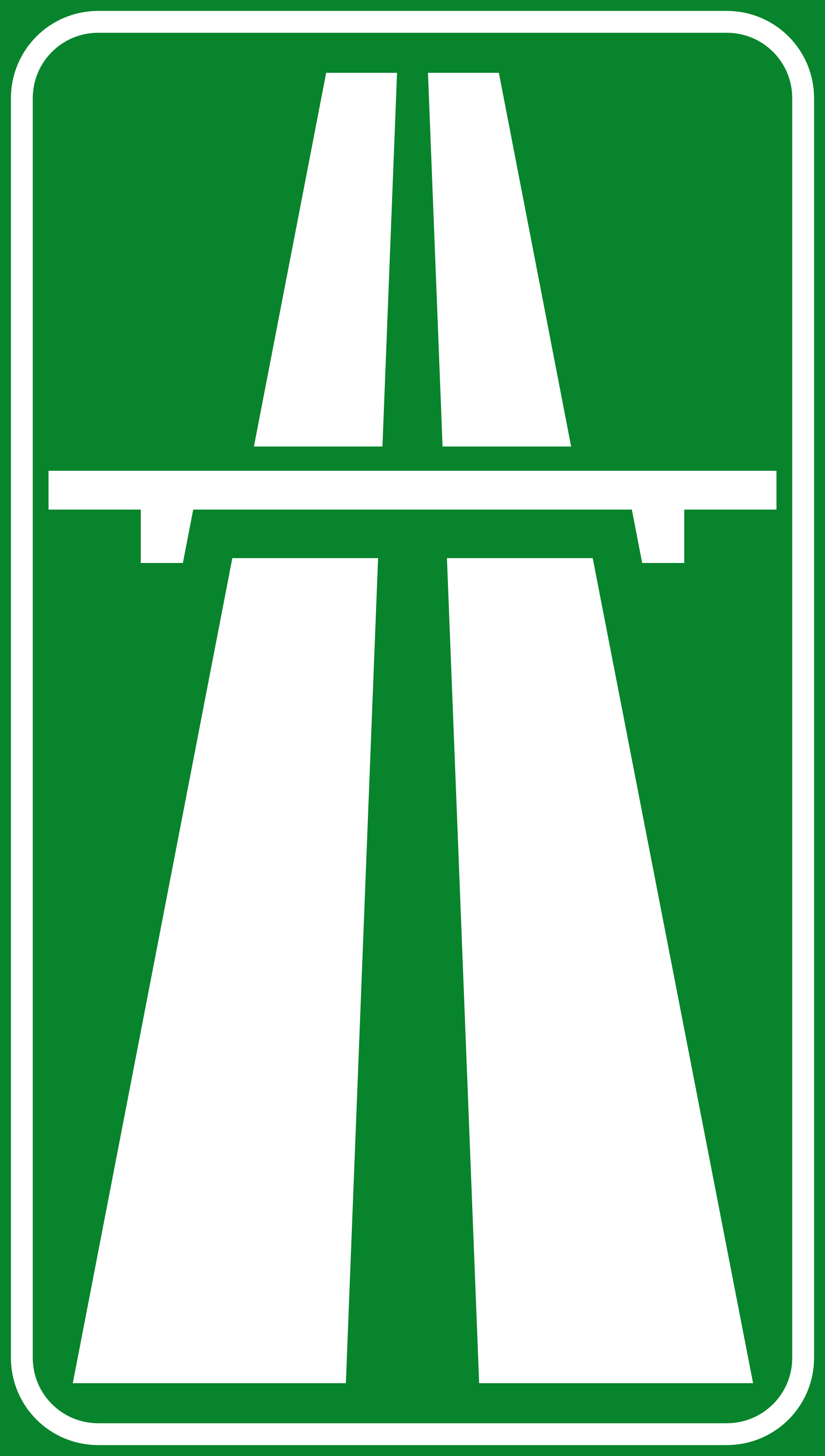
Motorway
Green sign
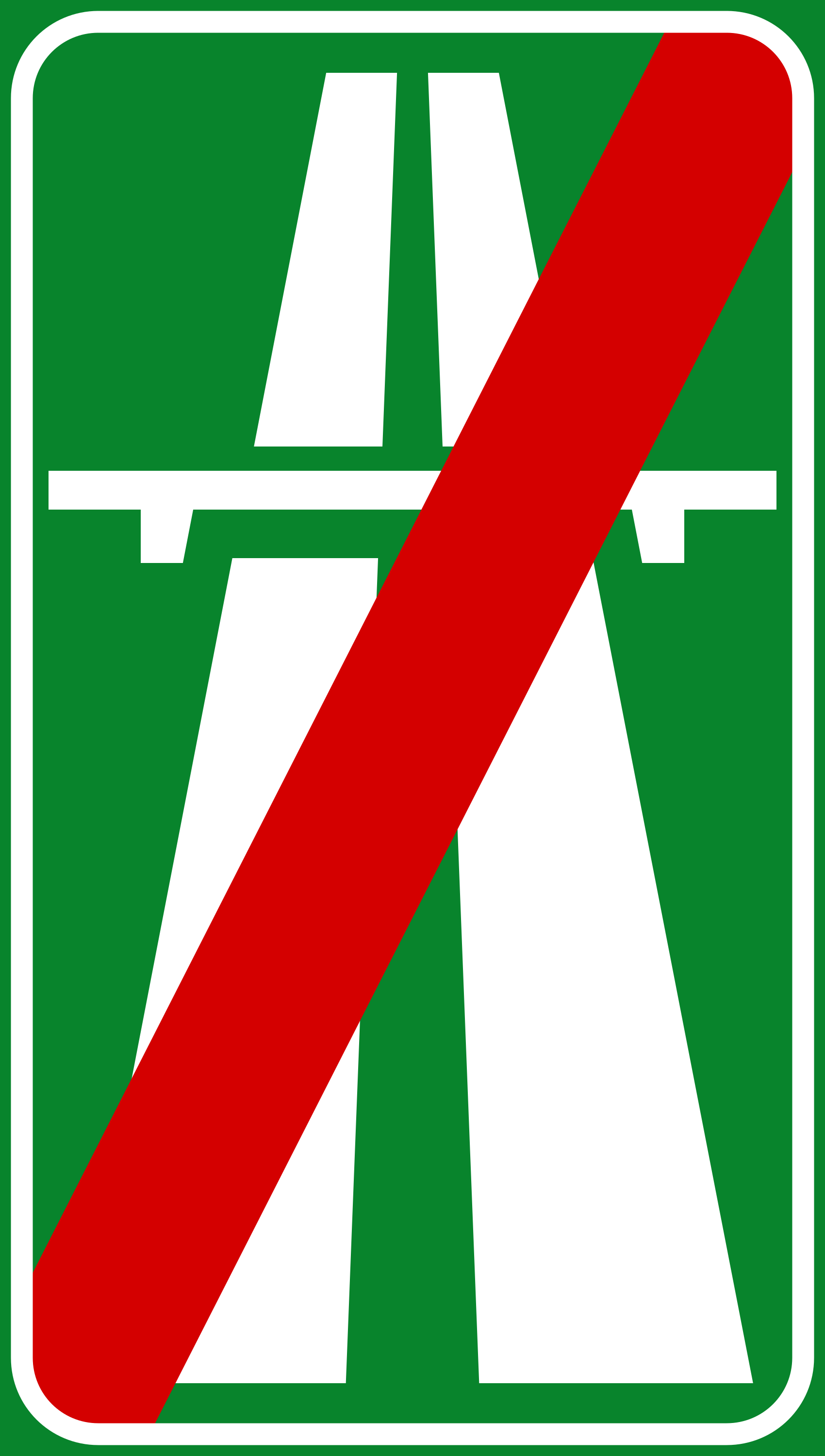
End of motorway
Motorway exit
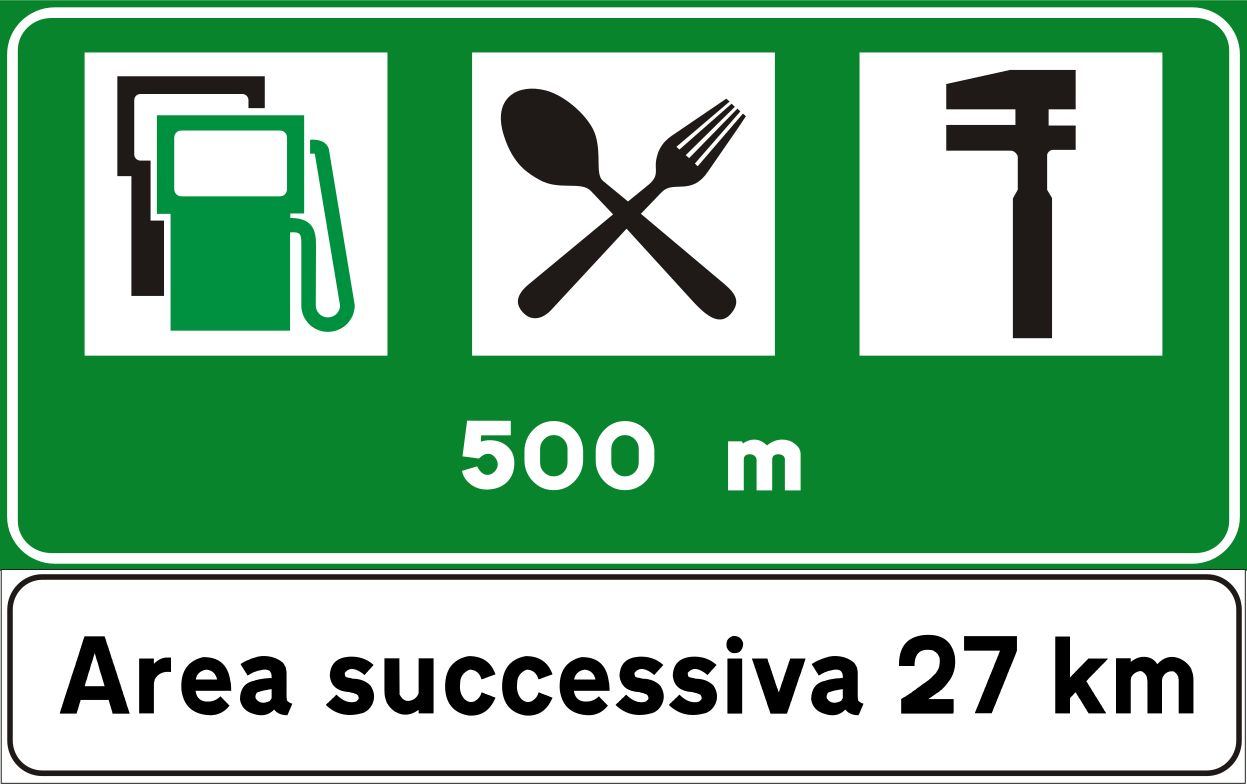
Service area
Fuel available
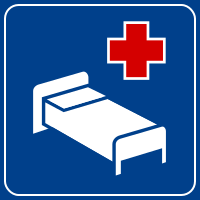
Hospital
Medical facility
Colour
Road Type
Examples
🟢 Green
Motorways
Motorway signs, exits, service areas
🔵 Blue
Primary extra-urban & urban roads
Town directions, distances
⬜ White
Local roads
Local directions, street names
🟡 Yellow
Roads under construction / diversions
Temporary alternative routes
🟫 Brown
Tourist and cultural sites
Museums, nature parks, historic sites
💡
EU sign: The blue sign with a circle of yellow stars indicates an EU border. It does not signal a compulsory customs stop but informs drivers of the proximity of the border.
Supplementary panels complete and specify the meaning of the main signs. They are positioned below the sign they refer to and limit, extend or clarify its validity.
Types of Supplementary Panels
Distance panels: indicate the distance in metres or km from the hazard or location (e.g. "200 m")
Extent panels: indicate the length of the stretch where the sign applies (e.g. "for 500 m")
Time panels: limit the sign's validity to certain hours or days (e.g. "8:00–20:00", "Mon–Fri")
Category panels: specify the vehicles to which the sign applies (e.g. "Lorries", "Motorcycles")
Junction diagram: diagram showing the junction layout and who has priority
Directional arrow: indicates the direction to which the sign refers (e.g. "↑", "→")
Panels with Specific Information
"Start" (Inizio): indicates the beginning of the zone subject to the sign
"End" (Fine): indicates the end of the zone subject to the sign
"Except…" (Tranne): excludes certain vehicles or situations from the sign (e.g. "Except residents")
Number of lanes: indicates how many lanes the prohibition/obligation applies to
Mass or dimensions: specify the weight or size limits to which the rule applies
💡
Interpretation: A no-parking sign with a "8:00–20:00" panel prohibits parking only during those hours. Outside those hours, parking is permitted (unless other restrictions apply).
Complementary signs provide additional information not covered by other categories. Temporary and roadworks signs regulate traffic in road works areas and have the same regulatory value as permanent signs.
Complementary Signs
Bend delineators: yellow arrows on a black background signalling dangerous bends
Obstacle delineators: white and red inclined stripes on carriageway obstacles
Buffers: reflective elements on crash barriers and in tunnels
Reflectors (cat's eyes): indicate carriageway edges at night
Kilometre markers: indicate the progressive kilometre number on national roads
Temporary and Roadworks Signs
Temporary signs are recognisable because:
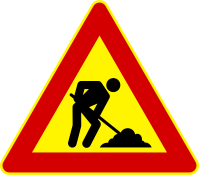
Road works
Active road works
Diversion
Alternative route
Road narrows
Reduced carriageway
Speed bumps
Artificial humps
They have a yellow background instead of white (for hazard and prohibition signs)
They are mounted on mobile supports (trestles, New Jersey barriers)
They may be combined with temporary traffic lights
⚠️
Obligation: Temporary signs have the same regulatory force as permanent signs. Failure to comply is an offence and is dangerous.
Speed limits protect the safety of all road users. Respecting them is not only a legal obligation but a moral duty. Speed is among the leading causes of serious road accidents.
General Speed Limits
Road Type
Private Cars
Motorcycles
Lorries > 3.5 t
Built-up areas
50 km/h
50 km/h
50 km/h
Secondary extra-urban
90 km/h
90 km/h
80 km/h
Primary extra-urban
110 km/h
110 km/h
80 km/h
Motorways
130 km/h
130 km/h
80 km/h
General speed limits for private cars in Italy (Art. 142 Highway Code)
130
Motorway
110
Primary extra-urban
90
Secondary extra-urban
50
Built-up area
Reduced Limits for Special Categories
New drivers (first 3 years): max 100 km/h on extra-urban, 110 km/h on motorways
Vehicles with trailer: generally reduced by 10–20 km/h
Public transport: category-specific limits
In snow or ice: max 50 km/h on all roads
In dense fog: adapt speed to visibility (prudence principle)
Level Crossing Behaviour
Stop if barriers are lowered or descending
Stop if audible or visual signals are active
Do not overtake other vehicles near a level crossing
Never cross a level crossing with a train in sight
The safe following distance is the minimum space to maintain between your vehicle and the one ahead, necessary to stop safely in the event of sudden braking. It is crucial for preventing rear-end collisions.
Calculating Safe Following Distance
Minimum stopping distance in optimal conditions
50 km/h
~28 m total
90 km/h
~71 m total
110 km/h
~99 m total
130 km/h
~131 m total
* On wet road double; on snow triple; on ice multiply by 8–10
Speed: doubling speed quadruples braking distance
Road surface conditions: on wet road, double the distance at minimum
Brake efficiency: worn brakes increase the required stopping distance
Reaction time: approximately 1 second before braking begins
Vehicle weight: heavy vehicles require greater braking distances
💡
Practical rule: At 130 km/h, the minimum safe following distance in optimal conditions is approximately 130 metres (1 metre per km/h). In adverse conditions, at least double this.
Rules on vehicle circulation govern driver behaviour in all driving situations: carriageway positioning, lane changes, behaviour at junctions and obligations towards emergency vehicles.
Carriageway Position
General rule: keep to the right, as close as possible to the right edge
On 3-lane roads: the centre lane is reserved for overtaking; right lanes for normal circulation
On multi-lane roads (same direction): obligation to use the right lane; move left only to overtake
Queuing: do not weave between lanes
Changing Direction and Lane
Signalling obligation: activate indicators with sufficient advance notice
Left turn: move to the leftmost lane before the junction
Right turn: move to the rightmost lane
Lane change: check mirrors and blind spots before moving
Reversing: permitted only for short distances and with maximum care
Behaviour Towards Emergency Vehicles
When emergency vehicles with active sirens and flashing lights are present (ambulances, fire engines, police, etc.):
Give way by moving to the right
Do not follow them to take advantage of the cleared traffic
Do not cross a junction they are about to enter
On motorways, form the "emergency corridor" between the first and second lane
💡
Convoys and funerals: Do not join a funeral or military convoy. It is forbidden to cross it without authorisation from officers. Those already in the convoy have right of way.
Correctly managing right of way at junctions is fundamental to safety. Priority rules follow a precise hierarchy that must be respected in every situation.
Priority Rule Hierarchy
Traffic officers: their signals override everything
Traffic lights: priority based on the light showing
Road signs: STOP, Give Way, Priority road sign
Right-of-way rule: in the absence of signs, give way to vehicles from the right
The Right-Hand Rule
📌 The Right-Hand Rule
In the absence of signage, the vehicle coming from the right has priority at junctions.
Vehicle B must give way to Vehicle A
A comes from B's right → B waits
Rule also applies to cyclists
⚠️ Important exceptions:
Trams ALWAYS have right of way
Vehicles exiting private courtyards or car parks: no right of way
STOP/Give Way signs override this rule
Roundabouts
🔄 How to behave at a roundabout
Vehicles already inside the roundabout have priority
Enter only if no vehicle is approaching from the left
Always circulate anti-clockwise
Activate the right indicator before exiting
Do not stop or park inside the roundabout
🔵 The roundabout sign (blue circle with arrows) makes internal priority compulsory.
Overtaking is one of the most dangerous manoeuvres and must be carried out with the utmost care and in full compliance with the rules. It causes numerous serious road accidents every year.
Conditions for Permitted Overtaking
Overtaking is only permitted when:
The road ahead is clear for a sufficient distance
There is no no-overtaking sign
There is no continuous centre line on your side
You are not on a hump, bend, near a junction, level crossing or tunnel
The vehicle ahead has not itself started an overtaking manoeuvre
How to Overtake
1 Check
→
2 Left indicator
→
3 Overtake
→
4 Right indicator
→
5 Return ✓
Check visibility and clear road
Confirm no prohibitions
Signal with the left indicator
Move towards the centre of the road
Accelerate decisively to minimise exposure time
Return right without cutting in front of the overtaken vehicle
Signal with the right indicator before returning to lane
Where Overtaking is Forbidden
On bends (even if the road seems clear)
On humps and near the crest of a hill
At junctions and grade crossings
At level crossings
On pedestrian crossings and in tunnels (unless a separate lane exists)
Where there is a continuous line on your side
Where specifically prohibited by a sign
🚨
Overtaking on the right: Forbidden except when the vehicle ahead is turning left, or in slow-moving queuing traffic on multi-lane roads.
Rules on stopping, parking, halting and departure govern where and how vehicles may stop. Correct compliance avoids traffic obstruction, danger to other users and penalties.
Definitions
Term
Definition
Characteristics
Halt (Arresto)
Involuntary stop due to external causes
Due to traffic, traffic lights, etc.
Stopping (Fermata)
Very brief stop with driver on board
To pick up / drop off passengers or goods
Parking (Sosta)
Vehicle immobilised for an indefinite period
Driver absent or not ready to depart
Stopping and Parking Prohibitions
It is forbidden to stop or park:
On lanes reserved for public transport
On cycle lanes and in pedestrian areas
On pedestrian crossings and within 5 metres before them
Near and at junctions
On bends and near the crest of humps
In tunnels, under bridges and in underpasses
In front of emergency exits
In spaces reserved for disabled people (if not authorised)
In front of dropped kerbs and private accesses
In motorway lay-bys (except in emergencies)
Departing Safely
Ensure the road is clear ahead and behind
Check that no vehicles or pedestrians are approaching
Signal your intention with the indicator
Give way to moving traffic
Move off without sudden manoeuvres
💡
Parking on a slope: On a downhill slope, turn the wheels towards the road edge (right). On an uphill slope, turn the wheels towards the centre. Always apply the parking brake.
Rules on vehicle loads, motorway circulation, passenger transport and towing ensure the safety of all road users. An incorrectly loaded vehicle is a danger to everyone.
Load Rules
The load must not protrude laterally beyond the prescribed limits
It may protrude rearward by no more than 3/10 of the vehicle's length
If it protrudes more than 1 metre, it must be marked with a yellow-black plate
At night or in poor visibility, red rear lights must be added
The load must be secured to prevent it falling or shifting
The maximum laden mass and payload of the vehicle must not be exceeded
Motorway Circulation
U-turns are forbidden
Reversing is forbidden
The hard shoulder must not be used except in emergencies
Side lights and dipped headlights must always be on
In case of breakdown, signal with the warning triangle at 100 m and wear a high-visibility jacket
Towing Vehicles and Trailers
The towed vehicle must have working brakes if its weight requires it
Maximum speed with a trailer is reduced compared to the solo vehicle
Carrying persons in a trailer is forbidden except where the regulations allow
Towing a broken-down vehicle must be done with the warning triangle displayed
Caravans and motorhomes are trailers and require their own number plate
⚠️
Vehicle panels: Vehicles carrying hazardous goods must display orange panels with specific codes. Vehicles transporting children show a yellow panel. These signals require greater following distance from other drivers.
💡 Use of lights, acoustic devices, warning lights and symbols
Correct use of lights is essential for being seen and seeing others. Dashboard warning lights provide information about the vehicle's condition. Knowing the meaning of each device can prevent breakdowns and accidents.
Types of Light and When to Use Them
Light Type
When Used
Notes
Side lights (parking lights)
At night, in tunnels, in poor visibility
Do not replace dipped headlights
Dipped headlights (low beam)
At night in towns, in tunnels, in traffic
Compulsory on motorways and outside towns
Full beam (high beam)
At night on unlit roads outside towns
Switch off when approaching vehicles
Front fog lights
Fog, heavy rain, snow
Only with visibility < 50 m
Rear fog light
Dense fog (visibility < 50 m)
One or two intense red lights
Hazard lights (4 flashers)
Vehicle stationary in emergency
Never while moving except danger
Indicators
Before every turn or lane change
With sufficient advance notice
🌙
Dipped headlights
Night, tunnels, traffic, always outside towns
☀️
Full beam
Night only, dark roads, no approaching vehicles
🌫️
Fog lights
Dense fog only (visibility < 50 m)
⚠️
Hazard lights
Only when stationary in emergency. Never while moving.
Acoustic Devices
Horn: use only to signal imminent danger
In built-up areas: horn use forbidden except in imminent danger
Outside built-up areas: recommended before blind bends
At night: replace acoustic signal with headlight flashing
Dashboard Warning Lights and Symbols
🔴 Red warning light: immediate danger, stop as soon as possible
🟡 Amber/orange warning light: alert, check the system as soon as possible
🟢 Green indicator: system active (lights, indicators, etc.)
Vehicle safety devices save lives. Seatbelts, helmets, child restraint systems and other devices are required by law and their effectiveness depends on correct use.
Seatbelts
Seatbelts are compulsory for all vehicle occupants
The driver is responsible for ensuring minors are buckled up
They must be worn correctly: the lap belt over the pelvis, not the abdomen; the diagonal belt over the shoulder, not the neck
They are only effective if worn correctly: never tuck the belt under the arm
With an airbag, maintain the correct position: do not lean towards the steering wheel
During pregnancy, continue wearing them according to medical guidance
🚨
Penalty: Failure to wear a seatbelt: fine and penalty points deducted. Driver is responsible for minor passengers.
Child Restraint Systems
Child's weight
Device type
Recommended position
Up to 13 kg
Group 0/0+ seat
Rear, rearward-facing
9–18 kg
Group 1 seat
Rear seat
15–25 kg
Group 2 seat
Rear with car seatbelt
22–36 kg
Group 3 booster
Rear with car seatbelt
Up to 150 cm in height (approximately 12 years old), a suitable restraint system is compulsory.
Helmet and Protective Clothing
Approved helmet: compulsory for drivers and passengers of mopeds and motorcycles
Must be correctly fastened
Must be replaced after any impact, even if not visibly damaged
High-visibility clothing: compulsory for motorcyclists in emergencies or breakdowns on motorways
Reflective jacket: compulsory for anyone leaving their vehicle on a motorway or primary extra-urban road
📄 Driving licences, penalty system and circulation documents
The driving licence certifies the right to drive motor vehicles. The Italian system provides for several licence categories and a points-based system to encourage responsible driving.
Licence Categories
Category
Vehicles covered
Minimum age
AM
Mopeds up to 50 cc, light quadricycles
14 years
A1
Motorcycles up to 125 cc (11 kW)
16 years
A2
Motorcycles up to 35 kW
18 years
A
All motorcycles
20 (with A2); 24 (direct)
B1
Non-light quadricycles
16 years
B
Cars up to 3.5 t, up to 8+1 seats
18 years
BE
Category B + trailer
18 years
C
Lorries over 3.5 t
21 years
D
Buses over 8+1 seats
24 years
Points-Based Licence
Starting score: 20 points
New drivers: 10 points for the first 3 years
Points are deducted for infringements (1 to 10 points per offence)
Points are recovered through safe driving courses or with 2 years without infringements (+2 points/year)
1
2
3
4
5
6
7
8
9
10
11
12
13
14
15
16
17
18
19
20
🟢 Active points 🟡 Caution zone (≤10 points) 🔴 Risk zone (≤5 points)
At 0 points: licence revoked; re-examination required.
Circulation Documents
Vehicle registration certificate: identifies the vehicle, includes technical data and registered keeper
Ownership certificate: certifies vehicle ownership (now included in the registration certificate)
RCA insurance: compulsory for all motor vehicles
Periodic roadworthiness test (MOT): compulsory every 2 years for cars
💡
Display obligation: Driving licence, vehicle registration certificate and proof of insurance must be produced immediately at the request of police officers.
Preventing road accidents and behaving correctly in the event of a collision are fundamental skills for every driver. In Italy, thousands of people lose their lives on the roads every year.
Preventive Behaviour
Do not use a hand-held phone while driving
Do not drive under the influence of alcohol or drugs: maximum blood alcohol level 0.5 g/l (0 g/l for new drivers and professional drivers)
Do not drive when sleepy: take regular breaks every 2 hours on long journeys
Maintain safe following distances
Do not overestimate your abilities
Adapt speed to weather and road conditions
Check the vehicle before any significant journey
Behaviour in the Event of an Accident
In the event of a road accident, the driver must:
Stop immediately (failure to do so constitutes a criminal offence)
Make the scene safe: switch on hazard lights, put on high-visibility jacket, position warning triangle
Call the emergency services: 118 for medical emergencies, 113 Police, 115 Fire Brigade, 112 Carabinieri
Render assistance to casualties within your means, without moving victims unless there is imminent danger
Notify authorities if there are casualties or damage to third parties
Exchange details with the other party (personal details, insurance company)
Complete the European Accident Report (CID) if possible
Special Characteristics of Motorcycle Riding
Motorcycles provide the rider with a different field of vision
They are less visible to other drivers, especially in blind spots
Pay special attention to instability on slippery surfaces
Risk of high-side in case of excessive rear-brake-only braking
A driver's physical and mental condition directly affects road safety. Alcohol, drugs, medications and fatigue drastically reduce driving ability. First aid can save lives.
Alcohol and Driving
The maximum permitted blood alcohol level is 0.5 g/l of blood.
0.0 g/l
✅ Limit for new drivers and professionals
0.5 g/l
⚠️ General legal limit (Art. 186 Highway Code)
0.8 g/l
🚨 Criminal offence — fine + licence suspension
1.5 g/l
🚔 Arrest + licence revoked
Effects of alcohol on driving:
Reduces reflexes and slows reaction times
Reduces risk perception
Impairs peripheral vision and distance judgement
Causes overestimation of one's own abilities
Increases aggression and risk-taking behaviour
Drugs, Medications and Fatigue
Drugs: any narcotic substance impairs driving. Zero tolerance. Criminal penalties even for small quantities.
Medications: many drugs (antihistamines, anxiolytics, sedatives) affect driving. Always read the package leaflet.
Fatigue: the first 2 hours of lost sleep reduce attention as much as 0.5 g/l of alcohol. Mandatory breaks every 2 hours.
Drowsiness at the wheel: opening the window or pulling over do not solve the problem. The only remedy is sleep.
Road First Aid
In the event of an accident with casualties:
Assess the scene: make it safe before approaching
Call 118 immediately
Do not move victims unless there is a life-threatening danger (fire, drowning)
Recovery position: for unconscious persons who are breathing
CPR (Cardiopulmonary Resuscitation): if the person is not breathing and has no pulse
Helmet: do not remove a motorcyclist's helmet unless there is an airway obstruction or CPR is needed
Civil and criminal liability of the driver and RCA insurance are fundamental aspects of motoring life. Understanding them allows adequate protection in the event of an accident.
Civil Liability
The driver of a vehicle is civilly liable for damage caused to third parties (people and property).
RCA insurance (Compulsory Third-Party Motor Insurance) covers damage caused to third parties.
Compulsory for all motor vehicles
Covers physical and material damage caused to third parties
Does NOT cover damage to your own vehicle (for this you need fully comprehensive / "kasko" insurance)
Does NOT cover damage to the responsible driver
The indemnity limit is the maximum sum the insurer will pay
Criminal Liability
Vehicular manslaughter: 2 to 7 years' imprisonment (aggravated with alcohol/drugs: up to 18 years)
Grievous bodily harm: imprisonment and licence suspension
Failure to render assistance: serious criminal offence, custodial sentence
Hit and run: aggravating factor for all penalties
The European Accident Report (CID) and Claims Procedure
The CID (Constatazione Amichevole di Incidente — Agreed Statement of Facts) is the European accident report form:
Completed jointly with the other party; does not imply admission of liability
Speeds up the claims procedure
Signed by both parties (one copy each)
Must be sent to your own insurance company within 3 days
In case of disagreement about the dynamics of the accident, contact the police.
🌿 Reducing fuel consumption, environmental respect and pollution
Eco-driving reduces fuel consumption, pollutant emissions and vehicle running costs. Environmental respect is also a legal obligation in several situations.
Eco-Driving and Efficient Driving Techniques
Change gear correctly: move up to a higher gear early (at approximately 2,000–2,500 rpm in diesel engines, 2,500–3,000 in petrol engines)
Anticipate braking: release the accelerator before slowing down, using engine braking
Maintain constant speed: avoid sudden acceleration and braking
Correct tyre pressure: under-inflated tyres increase fuel consumption by up to 3%
Do not carry unnecessary weight: every extra 100 kg increases consumption by 5%
Switch off the engine during stops of more than 1 minute (not in unsafe conditions)
Air conditioning: increases consumption; use it moderately
Pollution and Environmental Rules
Low Emission Zones (LEZ/ZTL): prohibit the most polluting vehicles from entering
Traffic restrictions: in case of smog, municipalities may limit circulation by category (Euro 0, 1, 2, 3…)
Euro emissions standards: vehicles are classified from Euro 0 to Euro 6d based on emissions. The higher the number, the less polluting.
Noise pollution: forbidden to use the horn unnecessarily, have noisy exhaust systems or exceed established noise limits
Waste and Environmental Respect
It is forbidden to throw waste out of the window
Correctly dispose of waste oils, filters and used tyres (collection centres)
Vehicle maintenance reduces emissions and increases safety
Hybrid and electric vehicles receive tax concessions and access to ZTL zones
Knowing the fundamental components of the vehicle allows it to be used safely, basic maintenance to be carried out, and potential faults to be recognised before they become dangerous.
Engine and Transmission
Engine: converts fuel energy into mechanical energy. Requires engine oil, coolant and filters in good condition.
Gearbox: transmits the engine's power to the wheels through different gear ratios.
Clutch: connects/disconnects the engine from the transmission for gear changes.
Differential: allows wheels on the same axle to rotate at different speeds (on bends).
Brakes and Steering
Disc brakes: more efficient, less prone to "fade" from overheating.